Kerala Herbs List for Bulk Buyers: Names, Parts and Forms

This list shows herbs commonly traded from Kerala and South India, with the botanical name, the part used in trade, the usual forms and typical industry uses. It is a reference catalogue, not a stock list: availability is confirmed on enquiry, together with quality documents and export terms.
Use it to check names and parts before you write a specification, and to see which forms are normally traded for each herb.
Key points
- Every herb is listed by botanical name and part; quote both in your enquiry.
- "Typical industry use" describes how the trade uses the material, not a health claim.
- All items are availability on enquiry. Nothing here is a price or stock offer.
- Protected and export-restricted species are deliberately excluded.
Which Kerala herbs are commonly traded in bulk?
The table below covers widely traded Ayurvedic herbs, spices and oil-bearing plants of Kerala and South India. Some are grown in Kerala; others reach Kerala's traders from neighbouring states. Ask for the origin of any lot.
| Common / Ayurvedic name | Botanical name | Part traded | Typical forms | Typical industry use | Availability |
|---|---|---|---|---|---|
| Amla (Amalaki, Indian gooseberry) | Phyllanthus emblica | Fruit | Dried fruit, powder | Ayurvedic formulations, hair oils and powders, food products | On enquiry |
| Haritaki | Terminalia chebula | Fruit | Dried fruit, powder | Ayurvedic formulations, Triphala blends | On enquiry |
| Bibhitaki | Terminalia bellirica | Fruit | Dried fruit, powder | Ayurvedic formulations, Triphala blends | On enquiry |
| Bhringraj | Eclipta prostrata | Whole plant, leaf | Dried herb, powder | Hair oils, hair powders, Ayurvedic formulations | On enquiry |
| Brahmi | Bacopa monnieri | Whole plant | Dried herb, powder | Ayurvedic formulations, nutraceuticals, extracts | On enquiry |
| Gotu kola (Mandukaparni) | Centella asiatica | Whole plant, leaf | Dried herb, powder | Cosmetics, Ayurvedic formulations, extracts | On enquiry |
| Guduchi (Giloy) | Tinospora cordifolia | Stem | Dried stem, powder | Ayurvedic formulations, extracts | On enquiry |
| Pippali (long pepper) | Piper longum | Fruit spike | Dried fruit, powder | Ayurvedic formulations, spice blends | On enquiry |
| Black pepper | Piper nigrum | Fruit | Whole, powder, essential oil | Food, Ayurvedic formulations, flavour | On enquiry |
| Turmeric (Haridra) | Curcuma longa | Rhizome | Dried rhizome, powder | Food, cosmetics, Ayurvedic formulations | On enquiry |
| Ginger (Shunthi) | Zingiber officinale | Rhizome | Dried rhizome, powder, essential oil | Food, beverages, Ayurvedic formulations | On enquiry |
| Cardamom | Elettaria cardamomum | Fruit, seed | Whole capsule, seed, essential oil | Food, flavour, Ayurvedic formulations | On enquiry |
| Cinnamon | Cinnamomum verum | Bark | Quills, pieces, powder | Food, flavour, Ayurvedic formulations | On enquiry |
| Neem | Azadirachta indica | Leaf, seed | Dried leaf, powder, seed oil | Soaps, cosmetics, hair care | On enquiry |
| Tulsi (holy basil) | Ocimum tenuiflorum | Leaf, aerial parts | Dried leaf, powder | Herbal teas, cosmetics, formulations | On enquiry |
| Sariva (Nannari, Indian sarsaparilla) | Hemidesmus indicus | Root | Dried root, powder | Traditional beverages, Ayurvedic formulations, hair oils | On enquiry |
| Vetiver (Usheera, Ramacham) | Chrysopogon zizanioides | Root | Dried root, essential oil | Perfumery, cosmetics, drinking-water infusions in Kerala homes | On enquiry |
| Manjistha | Rubia cordifolia | Root, stem | Dried pieces, powder | Cosmetics, soaps, Ayurvedic formulations | On enquiry |
| Shatavari | Asparagus racemosus | Root | Dried root, powder | Ayurvedic formulations, nutraceuticals | On enquiry |
| Vasa (Adulsa) | Justicia adhatoda | Leaf | Dried leaf, powder | Ayurvedic formulations | On enquiry |
| Moringa (drumstick) | Moringa oleifera | Leaf, seed | Leaf powder, seed oil | Food supplements, cosmetics | On enquiry |
| Hibiscus (Japa) | Hibiscus rosa-sinensis | Flower, leaf | Dried flower, leaf, powder | Hair care, cosmetics | On enquiry |
| Coconut | Cocos nucifera | Kernel (copra) | Coconut oil, virgin coconut oil | Base oil for hair, body and Ayurvedic oil preparations, soaps | On enquiry |
Availability on enquiry. This table is for reference only and is not an offer for sale.
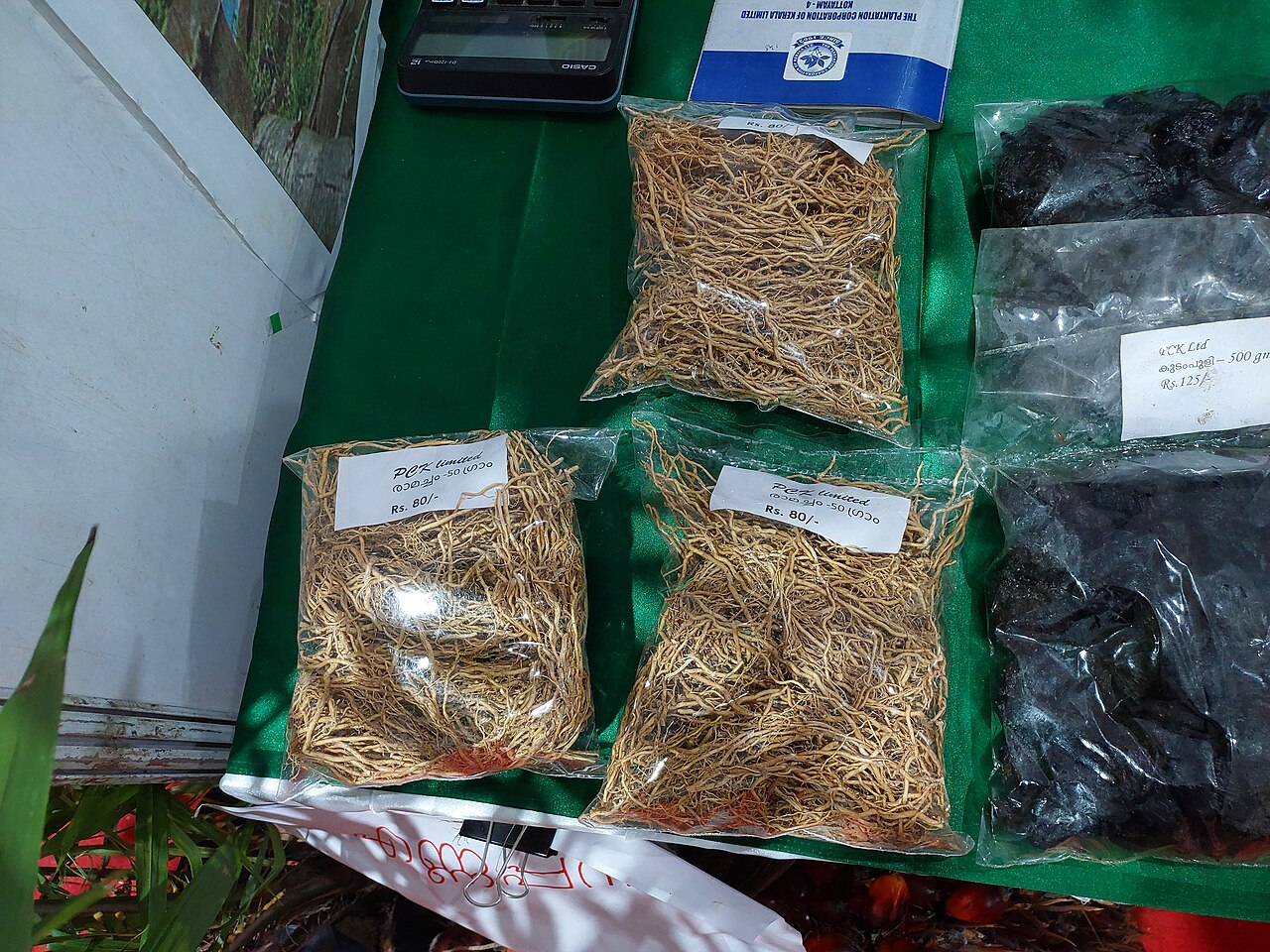
What do some of these herbs look like?
Seeing the whole plant helps buyers understand which part is traded and why dried material should be checked against a reference sample.


Why does the botanical name matter so much?
Trade and local names overlap. "Brahmi" is used for Bacopa monnieri and, in some regions, for Centella asiatica; "Sariva" and "Nannari" are commonly used for Hemidesmus indicus, but similar-looking roots exist. A specification based only on a common name invites substitution. Our article on quality checks for herbal raw materials explains identity testing, and our guide to herb forms explains why whole material is easier to authenticate than powder.
Which herbs are not on this list, and why?
We deliberately exclude species that are protected, CITES-listed or restricted for export from India. Examples include red sanders (Pterocarpus santalinus), sandalwood (Santalum album) and agarwood (Aquilaria species). Some plants used in Kerala's tradition, such as Coscinium fenestratum and Kaempferia galanga, appear on India's list of plants whose export is prohibited when obtained from the wild; cultivated material may require a certificate of cultivation. These are not offered through Global Ayurveda.
For a general overview of these rules, see our article on exporting herbal raw materials from India.
How should you enquire about a herb on this list?
Give the botanical name, part, form (and mesh size for powders), quantity, intended use, packing, destination and the documents you need. Global Ayurveda, published by Daksha Organics in Kerala, accepts enquiries for raw, dried, powder and oil forms from buyers in India and abroad. Availability, quality documents and export terms are confirmed for each enquiry. Send your requirement through the enquiry page.
Frequently asked questions
Are all herbs in the table in stock?
No. The table is a reference list. Availability, quality documents and export terms are confirmed for each enquiry.
Why is sandalwood not listed?
Sandalwood and red sanders are tightly controlled species, so Global Ayurveda does not offer them, along with other protected or export-restricted plants.
Can I order a herb that is not in the table?
You can ask. Send the botanical name, part and form through the enquiry page, and we will reply on whether it can be supplied legally and to your specification.
What does 'typical industry use' mean?
It describes the kinds of products manufacturers usually make with the material, such as hair oils, soaps or food products. It is not a health claim.
Kerala herbal raw materials for buyers in India and worldwide — send an enquiry.


